Introduction & Comparsion of NCM, LFP, and LMO for Lithium - Ion Battery
author: Flora
2025-08-23

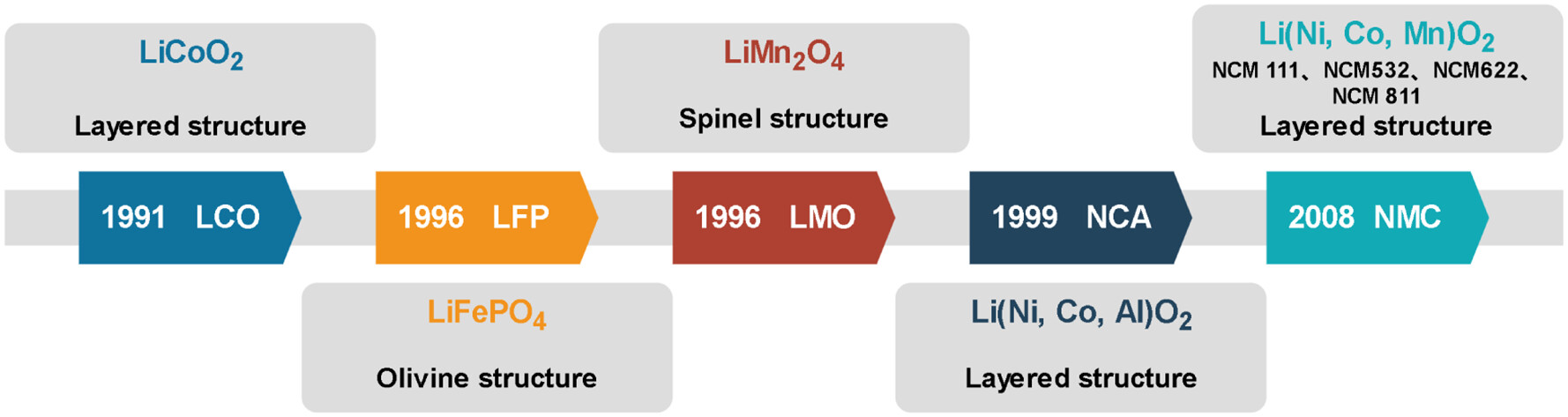
Lithium - ion batteries have become the dominant energy storage technology in various applications, from portable electronics to electric vehicles and large - scale energy storage systems. The performance of lithium - ion batteries is highly dependent on the choice of electrode materials. Among the numerous cathode materials, Lithium Nickel Cobalt Manganese Oxide (NCM), Lithium Iron Phosphate (LFP), and Lithium Manganese Oxide (LMO) are widely used and studied. Each of these materials has its own unique characteristics, which determine their application scenarios and development prospects.

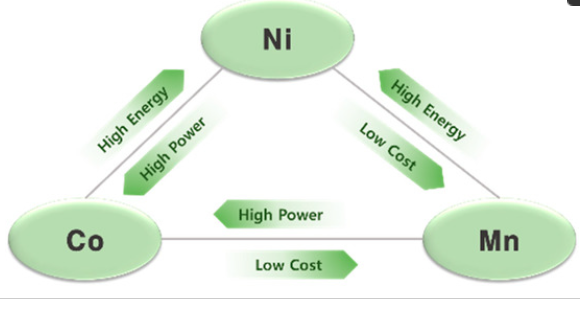
NCM is a ternary layered oxide material with the general formula LiNixCoyMnzO2, where x+y+z=1. It can be considered as a solid - solution of
LiCoO2 , LiMnO2 , and LiNiO2. The layered structure allows for the intercalation and de - intercalation of lithium ions during charge and discharge processes. In the structure, lithium ions are located in the inter - layer space, and nickel, cobalt, and manganese ions are in the transition - metal layer. The oxygen atoms form a close - packed structure, and the transition - metal ions are octahedrally coordinated by oxygen atoms.
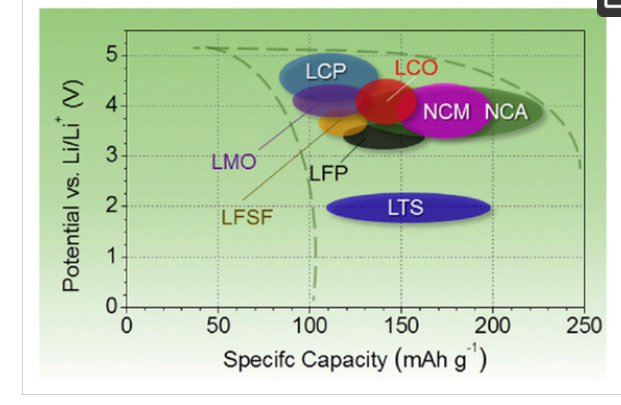
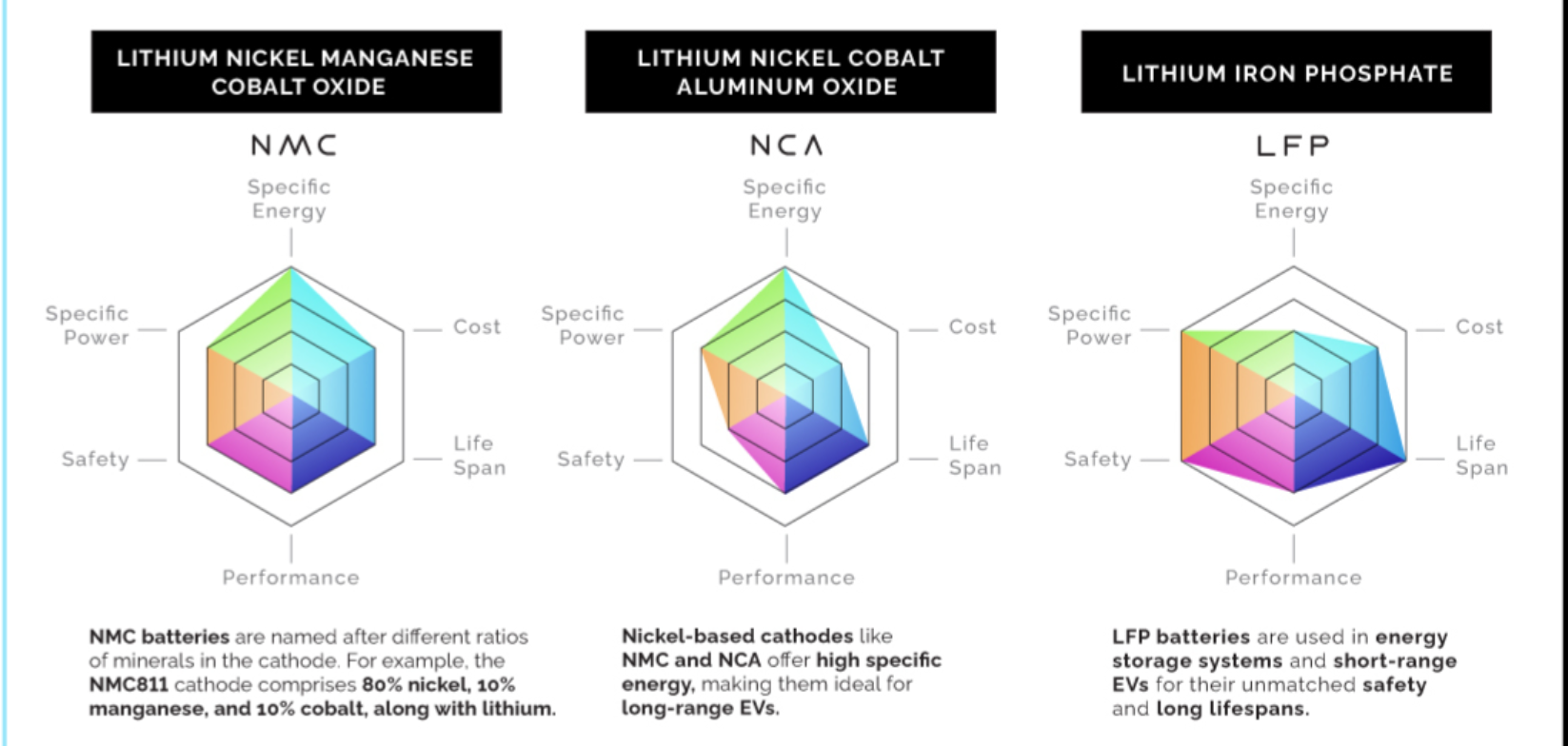
Generally, NCM materials have relatively high energy density. As the nickel content increases, the specific capacity of the material increases. For example, NCM811 has a higher specific capacity compared to NCM111. The high energy density makes NCM - based batteries suitable for applications where high energy storage in a small volume and light weight are required, such as in electric vehicles.
LFP has an olivine - type crystal structure with the chemical formula LiFePO4. In the structure, iron ions (Fe2+) are octahedrally coordinated by six oxygen atoms to form FeO6 octahedra, and phosphate groups ( PO43−) are tetrahedrally coordinated by four oxygen atoms to form PO4 tetrahedra. These FeO6 octahedra and PO4 tetrahedra are connected alternately to form a three - dimensional framework structure. Lithium ions are located in the channels formed by the framework. The olivine structure belongs to the orthorhombic system with the space group Pmnb.High Safety: The P - O bond in the phosphate group of LFP is very stable, which endows LFP with excellent thermal stability. The thermal decomposition temperature of fully charged LFP is as high as about 700°C. In addition, LFP is less likely to release oxygen even under extreme conditions such as over - charge, short - circuit, and high temperature, reducing the risk of combustion and explosion.
LMO :There are mainly two crystal structures of LMO: spinel - structured LiMn2O4 and layered - structured LiMnO2
. The spinel - structured LiMn2O4 has a face - centered cubic (FCC) structure, where lithium ions occupy the 8a tetrahedral sites, and manganese ions are located in the 16d octahedral sites, and oxygen atoms are in the 32e sites. The structure is shown in Figure 3. The spinel structure has a three - dimensional lithium - ion diffusion channel, which is beneficial to the fast migration of lithium ions.
. The spinel - structured LiMn2O4 has a face - centered cubic (FCC) structure, where lithium ions occupy the 8a tetrahedral sites, and manganese ions are located in the 16d octahedral sites, and oxygen atoms are in the 32e sites. The structure is shown in Figure 3. The spinel structure has a three - dimensional lithium - ion diffusion channel, which is beneficial to the fast migration of lithium ions.
Low Cost: Manganese is abundant in nature and relatively inexpensive, so LMO - based batteries have a cost advantage compared to some other lithium - ion battery materials.
LFP has an excellent cycle life, which can reach 2000 - 7000 cycles under normal conditions. The stable structure of LFP during the charge - discharge process contributes to its long cycle life. NCM also has a relatively good cycle life, generally in the range of 1000 - 3000 cycles, depending on the specific composition and manufacturing process. However, LMO has a relatively poor cycle life. Due to issues such as manganese dissolution, especially at high temperatures, the capacity of LMO - based batteries decays rapidly after a certain number of cycles.
- NCM Applications
- NCM is widely used in electric vehicles, especially in high - end electric vehicles that require long driving ranges. For example, many well - known electric vehicle manufacturers use NCM - based batteries in their flagship models to achieve high energy density and long - range driving performance. It is also used in some high - performance portable electronics, such as high - end smartphones and tablets, where a high - energy - density power source in a small volume is needed.
- LFP Applications
- LFP is mainly used in applications where safety and long cycle life are emphasized. In the field of electric vehicles, it is used in some low - speed electric vehicles, electric buses, and logistics vehicles. Electric buses and logistics vehicles operate in urban areas with relatively fixed routes and have high requirements for battery safety and cycle life. In addition, LFP is also widely used in large - scale energy - storage systems, such as grid - connected energy - storage stations and home - energy - storage systems, to store electricity for peak - shaving and valley - filling.
- LMO Applications
- LMO is often used in power tools, where high - power output and relatively low cost are required. The high - power - density characteristic of LMO can meet the requirements of power - tool motors for high - current discharge. It is also used in some small - scale energy - storage applications where cost is a major consideration, such as backup power for some low - power electronic devices.