Electric Vehicle Charging Piles: Infrastructure Revolution and Future Outlook in the New Energy Era
Electric Vehicle Charging Piles: Infrastructure Revolution and Future Outlook in the New Energy Era
Driven by the dual waves of global energy transition and the electrification of the automotive industry, electric vehicle (EV) charging piles, as the "energy supply stations" for new energy vehicles, have evolved from simple charging devices into core infrastructure supporting intelligent transportation and the energy internet. Their development history reflects the pace of technological iteration, the intensity of policy support, and the enthusiasm of market demand, while future trends indicate that they will be deeply integrated into the transformation of the social energy system.
I. Development Status: Parallel Expansion of Scale and Optimization of Structure
(I) Leapfrog Growth in Market Scale
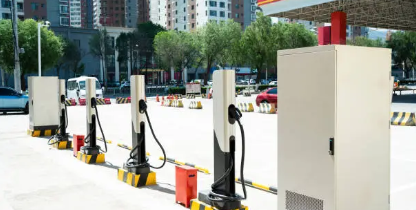
The resonance between policy impetus and market demand has spurred explosive growth in the charging pile market. By the end of 2024, the cumulative number of EV charger and swapping infrastructure in China had reached 12.818 million units, a year-on-year increase of 49.1%. The annual charging volume even exceeded 110 billion kWh, with a year-on-year growth rate of 38%. This scale not only ranks first globally but also forms a pattern of "private piles as the mainstay and public piles as supplementary" — in 2024, the increment of private charging piles reached 3.368 million units, accounting for 79.8% of the total annual increment. Although the growth of public charging piles fluctuated year-on-year, their stock is still steadily climbing to the expected 4.617 million units by 2025. In terms of key scenario coverage, the coverage rate of charging piles in national expressway service areas has reached 98%. During the 2024 National Day holiday, the average daily charging volume increased by 80% compared with the same period in 2023, confirming the supporting capacity of infrastructure for travel demand.
(II) Concentration Characteristics in Regional and Market Patterns
The construction of charging piles in China shows a significant regional agglomeration effect. The top 10 regions such as Guangdong, Zhejiang, and Jiangsu account for 68.8% of public charging piles. Charging volume is also mainly concentrated in coastal eastern regions and populous provinces, forming a layout matching the ownership of new energy vehicles. In terms of market competition, industry concentration continues to rise. The top 15 operators occupy 87.1% of the market share. Leading enterprises such as TELD and Star Charge operate 709,000 and 625,000 units of equipment respectively, establishing leading positions with network scale and technological advantages. Meanwhile, market participants are becoming more diverse, with state-owned enterprises, private enterprises, and technology companies working together to form a full industrial chain ecology of "manufacturing + operation + service".
(III) Gradual Maturity and Standardization of Technical System
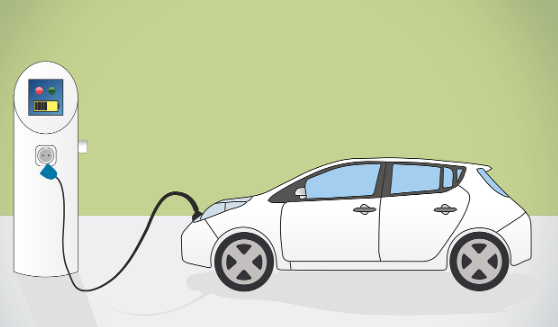
In terms of technological evolution, charging piles have upgraded from AC slow charging to DC fast charging, with power ranging from 7kW for household use to 480kW and above for commercial use. Safety standards and metering systems have been continuously improved. High-level protection such as IP65 has become standard for public piles, and Class 1 metering accuracy ensures the accuracy of charging fees. The integration of communication technologies has also freed charging piles from isolation. Methods such as 4G and Wi-Fi have realized the popularization of remote monitoring, fault diagnosis, and intelligent payment, laying the foundation for improving operational efficiency.
II. Core Trends: Technological Breakthroughs and Ecological Integration Reshape the Industry's Future
(I) High-Power Fast Charging: High-Voltage and Liquid-Cooling Technologies Address "Charging Anxiety"
Insufficient charging efficiency remains a key bottleneck restricting the popularization of new energy vehicles, and high-power fast charging technology is becoming a breakthrough direction. The "Three-Year Doubling" initiative of the National Development and Reform Commission clearly proposes building 100,000 high-power charging piles by 2027, and policy dividends are accelerating technological implementation. Currently, liquid-cooling technology has become the mainstream path due to its heat dissipation efficiency advantages. Shenghong Co., Ltd.'s 480kW liquid-cooled ultra-fast charging pile adopts "independent heat dissipation for single modules", increasing maintenance efficiency by 3 times; Yonggui Electric's mass-produced 1000V/600A liquid-cooled charging gun has a failure rate of less than 0.1% and a market share of over 30%. These technological breakthroughs are bringing charging time closer to the "refueling level", and when combined with the popularization of 800V high-voltage on-board platforms, will completely change the user charging experience.
(II) Vehicle-to-Grid (V2G): Transformation from "Power Consumption Terminal" to "Energy Storage Unit"
The maturity of V2G technology has transformed charging piles from one-way charging equipment into two-way energy interaction nodes. Its core logic is to utilize the energy storage potential of EV batteries to charge and store energy during off-peak grid loads and discharge to peak-shave during peak periods, with a single pile generating an annual income of up to 12,000 yuan. At the policy level, the target of adding 5,000 V2G facilities has been clarified, and pilot projects in Shenzhen, Shanghai, and other places have achieved remarkable results — NARI's virtual power plant platform can peak-shave 17,000 kWh in a single day, and Autel, as a V2G standard setter, has its bidirectional chargers adapted to high-end vehicle models. It is expected that by 2030, this trillion-level market will become an important part of the energy internet.
(III) Intelligence and Networking: Building an Intelligent Charging Ecosystem
Charging piles are evolving from "hardware devices" to "intelligent terminals", with the application of big data and artificial intelligence throughout the entire operation chain. By analyzing data such as user charging habits and equipment operating status, demand forecasting and proactive maintenance can be realized; the all-liquid-cooled ultra-fast charging system jointly developed by Wanma Co., Ltd. and Huawei has even achieved automated and unmanned management of the charging process. In terms of network integration, leading enterprises are accelerating the construction of cross-regional and cross-brand charging networks, integrating with mobile apps to realize "one-click pile finding and seamless payment". Meanwhile, through integration with scenarios such as shopping malls and hotels, they are creating a value-added service model of "charging + consumption".
(IV) Internationalization and Marketization: Opening Up New Growth Space for the Industry
Domestic enterprises are accelerating their overseas expansion with technological and cost advantages. Companies such as Shenghong Co., Ltd. have overseas orders accounting for 40% of their total, becoming suppliers for international brands like Tesla. At the same time, the market-oriented mechanism is gradually improving. The construction of charging piles has shifted from policy-driven to "policy + market" dual-drive, and a differentiated pricing mechanism for electricity prices and service fees is taking shape. With the improvement of charging network coverage and the innovation of business models, the potential of rural and sinking markets will be further activated, promoting the extension of charging piles from cities to the whole region.

III. Challenges and Outlook
Despite the rapid development, the charging pile industry still faces many challenges: the prominent imbalance in regional development, insufficient coverage in central and western regions; some public piles have problems such as low utilization rate and delayed maintenance; the large-scale application of V2G technology still needs to overcome obstacles in standard unification and benefit distribution mechanisms.
In the future, with the continuous deepening of technological innovation and the improvement of the policy system, these challenges will be gradually resolved. It is expected that by 2030, China will form a "comprehensively covered, rationally laid out, intelligent and efficient" charging network. Charging piles will not only be supporting facilities for new energy vehicles but also become key hubs connecting the three fields of transportation, energy, and information. In this energy revolution and industrial transformation, the charging pile industry is writing a new chapter of green travel and sustainable development with its unique strategic value.


Solar Power and Wind Power: The Dual Drivers of Clean Energy
The development Trends of Ebike lithium-electric bicycle electric bicycles