Guide to Going Overseas for Household Energy Storage Categories-South Africa
Last year, the household storage market in Europe exploded, with a large number of suppliers swarming in and expanding production and volume, resulting in high levels of stockpiling. Since this year, affected by factors such as inventory digestion, falling electricity prices, and insufficient installation capacity, market shipments have slowed down significantly. , the intensified competition in the industry has also provoked local price wars. At the same time, product certification requirements and market entry barriers in mature markets such as Europe and the United States have become increasingly high, which has also discouraged some companies.
Faced with increasingly fierce competition, more and more manufacturers are looking for growth in other emerging markets. The rise of key emerging markets such as South Africa and Southeast Asia where there is a strong need for backup power may usher in a new era for the global household energy storage market. Round shuffle.
| Average temperatures (℃) in South Africa | Averrage temperatures (℉) in South Africa | |||||||||||||||
| Summer | Winter | Summer | Winter | |||||||||||||
| (January) | (July) | (January) | (July) | |||||||||||||
| City | Max | Min | Max | Min | City | Max | Min | Max | Min | |||||||
| Bloemfontein | 29 | 15 | 15 | -2 | Bloemfontein | 87.8 | 59 | 62.6 | 28.4 | |||||||
| Cpae Town | 26 | 16 | 16 | 7 | Cpae Town | 78.8 | 60.8 | 64.4 | 44.6 | |||||||
| Durban | 28 | 21 | 23 | 11 | Durban | 82.4 | 69.8 | 69.8 | 50 | |||||||
| East London | 26 | 18 | 19 | 10 | East London | 78.8 | 64.4 | 69.8 | 50 | |||||||
| George | 25 | 15 | 15 | 7 | George | 77 | 59 | 66.2 | 44.6 | |||||||
| Johannesburg | 26 | 15 | 17 | 4 | Johannesburg | 78.8 | 59 | 68 | 39.2 | |||||||
| Kimberley | 33 | 18 | 19 | 3 | Kimberley | 91.4 | 64.4 | 66.2 | 37.4 | |||||||
| Mthatha | 27 | 16 | 21 | 4 | Mthatha | 80.6 | 60.8 | 69.8 | 39.2 | |||||||
| Musina | 34 | 21 | 25 | 7 | Musina | 93.2 | 69.8 | 77 | 44.6 | |||||||
| Nelspruit | 29 | 19 | 23 | 6 | Nelspruit | 84.2 | 66.2 | 73.4 | 42.8 | |||||||
| Pietermaritzburg | 28 | 18 | 23 | 3 | Pietermaritzburg | 82.4 | 64.4 | 73.4 | 37.4 | |||||||
| Polokwane | 28 | 17 | 20 | 4 | Polokwane | 82.4 | 62.6 | 68 | 39.2 | |||||||
| Port Elizabeth | 25 | 18 | 20 | 9 | Port Elizabeth | 77 | 64.4 | 68 | 48.2 | |||||||
| Pretoria | 29 | 18 | 18 | 5 | Pretoria | 84.2 | 64.4 | 75.2 | 41 | |||||||
| Richards Bay | 29 | 21 | 23 | 12 | Richards Bay | 84.2 | 69.8 | 73.4 | 53.6 | |||||||
| Skukuza | 33 | 21 | 26 | 6 | Skukuza | 91.4 | 69.8 | 78.8 | 42.8 | |||||||
| Thohoyandou | 31 | 20 | 24 | 10 | Thohoyandou | 87.8 | 68 | 75.2 | 50 | |||||||
| Upington | 36 | 20 | 21 | 4 | Upington | 96.8 | 68 | 69.8 | 39.2 | |||||||
South Africa relies heavily on coal-fired power generation, leaving residents in a power crisis
South African electricity is dominated by coal power. In 2022, the proportion of coal power in the total load of the South African system fell below 80% (77.7%) for the first time, while renewable energy power generation (wind energy, solar photovoltaic and solar thermal power generation) only accounted for It accounts for 7% of the total energy structure, and the total power generation has shown a continuous downward trend in the past ten years.
The National Electricity Company (Eskom), which monopolizes more than 90% of South Africa's electricity market, has its energy availability factor (EAF) of generators falling to 58.1% in 2022. In order to prevent the aging and collapse of coal power equipment from causing grid paralysis, it has begun to interrupt regional power in turn. supply and significantly increase electricity prices.
Due to the high monopoly of power supply in South Africa, the construction of large-scale public power facilities requires a large amount of investment and a long construction period, making the power shortage problem difficult to solve in the short term. For local residents, configuring household energy storage is a quick, effective and economical way to solve the current problem of frequent power outages.
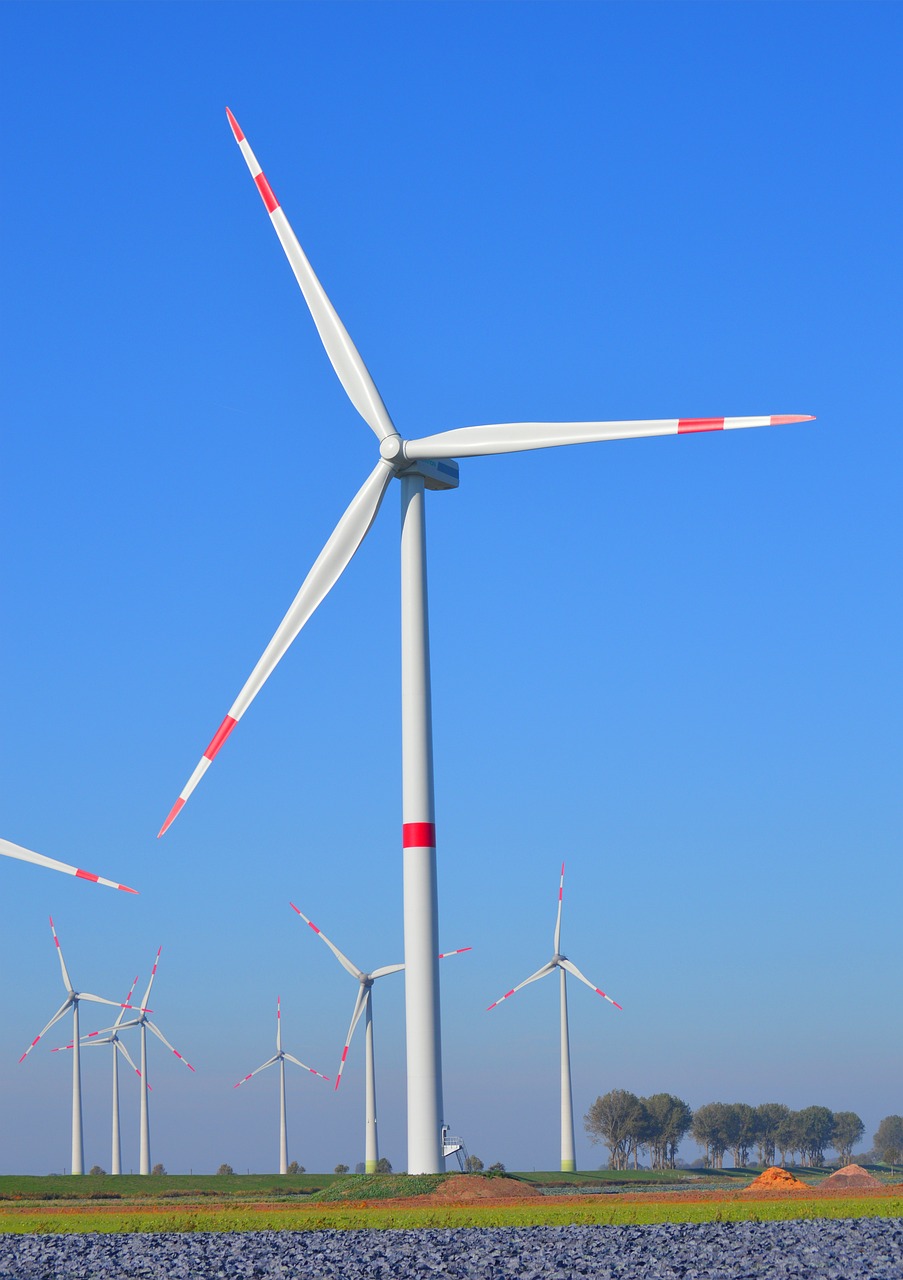
However, for small-scale wind power generation based on households, there are many limitations in installing wind power systems, which cannot be applied to most households in South Africa:
1. Installation requires permission from relevant departments;
2. A vertically open space with sufficient wind is required;
3. High installation cost and later maintenance cost (wear and tear repair of moving parts);
4. The energy utilization rate is low, and the turbine can only generate electricity when it reaches a specific speed (RPM);
5. Real-time monitoring is required, and the turbine needs to be shut down during high wind speeds to avoid serious damage;
6. Loud noise and strong vibration.
Therefore, the current mainstream power backup solutions for South African households are still diesel power generation and photovoltaic power generation.
The use of diesel generators for daily power generation brings a lot of inconvenience to residents' lives. In addition to expensive operating costs, residents also complain frequently due to the noise of the generators. Between February 2022 and February 2023, the Cape Town Health Department received a whopping 197 complaints about generator noise. In addition, the use of diesel generators also presents potential safety risks.
The pain point of photovoltaic power generation is that the backup time is limited, but for South African households with frequent and long-term power outages, the demand for backup power is the primary need. Therefore, household photovoltaic storage solutions should maximize the user's anxiety about backup power through the reasonable ratio of PV components, inverter power, battery capacity, load consumption, etc.
At present, the solution of sharing diesel power generation and household solar energy storage has become a more preferred option for many South African consumers.
Government subsidies encourage photovoltaic power generation and trigger a consumer savings boom
In order to promote the low-carbon energy transformation, the South African government has increased its subsidy policy. In July 2022, it announced an exemption from the license threshold for all embedded power generation (distributed self-generation). In February 2023, it announced the expansion of renewable energy tax incentive policies to provide investment in renewable energy. A total of R4 billion in tax relief is available to businesses and individual users installing rooftop PV.
Due to the long backup time of photovoltaic power, residents generally need to use energy storage equipment to ensure stable use of power, prompting a surge in demand for household storage. In the face of frequent power outages, South African households proactively use user storage devices to seek electricity security.
Since September 2022, the degree of load shedding and power curtailment in South Africa has escalated. Google searches for keywords such as "inverter" (inverter), "battery" (battery) and "solar" (solar energy) have surged, especially during the load shedding period.
South Africa’s household savings market demand is growing rapidly, with China as the main importing country
South Africa's imports of solar panels and inverters have surged as the power crisis worsens. In the first six months of 2023, South Africa imported $2.5 billion (R47 billion) worth of solar panels, lithium batteries and inverters.
In the first half of the year, the total value of solar panels imported into South Africa reached US$651 million. The total import volume in Q1 was three times that of the same period last year, and imports in Q2 jumped again.
South Africa imported US$1.1 billion worth of lithium-ion cells and battery packs in the first half of 2023, which has exceeded the total imports in 2022 (US$700 million), mainly from China. If the current fixed energy storage order volume is estimated at US$250/kWh, it is equivalent to South Africa importing approximately 4.4 GWh of lithium-ion batteries and battery packs in the first six months of this year.
Judging from South Africa's inverter import data in the past 20 years, China is South Africa's main importer of inverters, and the proportion of inverters imported from China in 2022 far exceeds the total imports from other countries.
From January to July 2023, China exported a total of 3.108 billion yuan of inverters to South Africa, +487.7% year-on-year; the average price was 2,152.0 yuan/unit, +105.6% year-on-year from January to July 2022, achieving the highest price and volume of inverters exported to South Africa. Double liter.
South Africa’s mainstream household savings product type mix and demand trends
Taking a 5kW inverter as an example,
The inverter costs approximately R35,000,
Lithium batteries cost approximately R25,000,
Solar panel prices generally range from R8 000-10 000 per kWh.
The inverter needs to be installed by a certified electrician, and the installation cost is R10,000-20,000.
Estimated total installation cost is R120,000 (approximately US$6,200)
At present, most households in South Africa choose to use inverters with rated power of 3kW-5kW and batteries of 5kWh-10kWh, and the demand for power and capacity is showing an increasing trend.
Zhou Jie: Development status and market prospects of virtual power plants in Japan
Global Solar Energy Storage Outlook 2023