Lithium Batteries VS Strong Acid Batteries
Lithium Batteries
Lithium batteries operate based on the lithium-ion intercalation/deintercalation mechanism during charging and discharging. When charging, under the action of an external electric field, lithium ions (Li⁺) in the positive electrode material (such as lithium cobalt oxide, lithium iron phosphate) break away from the positive electrode lattice, pass through the electrolyte and the separator, and intercalate into the negative electrode material (usually graphite). At the same time, electrons flow from the positive electrode to the negative electrode through the external circuit to maintain charge balance. During discharging, the reverse process occurs: lithium ions deintercalate from the negative electrode, return to the positive electrode through the electrolyte and separator, and electrons flow from the negative electrode to the positive electrode through the external circuit to provide electrical energy for external devices.

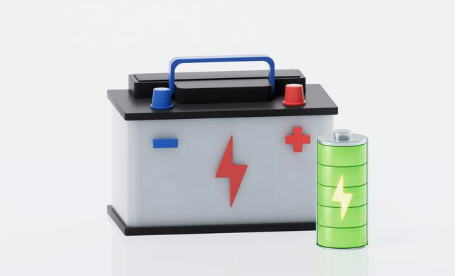
Strong Acid Batteries (Taking Lead-Acid Batteries as an Example)
Strong acid batteries, with lead-acid batteries being the most common type, rely on electrochemical redox reactions of lead and its oxides in a sulfuric acid electrolyte. During charging, lead dioxide (PbO₂) on the positive electrode is reduced to lead sulfate (PbSO₄), while lead (Pb) on the negative electrode is oxidized to lead sulfate (PbSO₄), and water in the electrolyte is decomposed into hydrogen and oxygen (a small amount of gas evolution occurs). During discharging, lead sulfate on the positive electrode is oxidized back to lead dioxide, and lead sulfate on the negative electrode is reduced back to lead. Meanwhile, sulfuric acid is regenerated in the electrolyte, and the concentration of sulfuric acid changes with the state of charge (the higher the charge state, the higher the concentration of sulfuric acid).

Performance Comparison


Price Comparison
- Lithium Batteries: The initial purchase cost is relatively high. Taking lithium iron phosphate batteries (a common type in energy storage and electric vehicles) as an example, the price is usually 1.5-3 yuan/Wh (or 200-400 US dollars/kWh). The high cost is mainly due to the expensive raw materials (such as lithium, cobalt, nickel) and complex manufacturing processes (such as electrode coating, cell assembly).
- Strong Acid Batteries (Lead-Acid): The initial purchase cost is low. The price of lead-acid batteries is generally 0.5-1 yuan/Wh (or 70-140 US dollars/kWh). Lead is abundant in resources and low in price, and the manufacturing process of lead-acid batteries is simple (such as casting electrodes, assembling cells), so the overall cost is low.
Total Cost of Ownership (TCO)
-
- Lithium Batteries: Although the initial cost is high, the total cost of ownership is lower in the long run. Due to their long cycle life (which can be used for 5-10 years), low maintenance costs (no need for regular water addition and equalizing charging) and high energy efficiency (charge-discharge efficiency up to 85%-95%), lithium batteries can reduce replacement frequency and energy loss. For example, in the field of household energy storage, a lithium battery system may cost twice as much as a lead-acid battery system initially, but it can be used for 8-10 years without replacement, while a lead-acid battery system needs to be replaced every 2-3 years, and the total cost over 10 years is 30%-50% lower than that of lead-acid batteries.
- Strong Acid Batteries (Lead-Acid): The total cost of ownership is high in the long run. Short cycle life requires frequent replacement (usually every 2-3 years), and regular maintenance (such as adding distilled water, cleaning electrodes) increases labor and material costs. In addition, the low charge-discharge efficiency (only 70%-80%) leads to more energy loss during use. Taking electric bicycles as an example, the initial price of a lead-acid battery is about 300-500 yuan, but it needs to be replaced every 2 years, and the total cost over 6 years is about 900-1500 yuan; while a lithium battery for electric bicycles costs about 800-1200 yuan initially, but can be used for 6 years, with a total cost 20%-30% lower than that of lead-acid batteries.

Summary
Lithium batteries and strong acid batteries (lead-acid batteries) have significant differences in working principles, performance and prices. Lithium batteries have the advantages of high energy density, long cycle life, good high-rate performance and low total life-cycle cost, making them the first choice for portable electronic devices, electric vehicles and large-scale energy storage systems. Strong acid batteries (lead-acid batteries) have the advantage of low initial purchase cost, but are limited by low energy density, short cycle life and poor environmental friendliness, and are mainly used in low-demand scenarios such as traditional internal combustion engine vehicle starting, backup power supplies for small equipment and low-speed electric vehicles. With the continuous advancement of lithium battery technology and the decline in raw material prices, lithium batteries will further expand their application scope, while strong acid batteries (lead-acid batteries) will gradually withdraw from high-demand markets and maintain a dominant position only in specific low-end markets.

Comparison and Differences Between NCM Lithium Batteries and LFP Lithium Batteries
Producing of Electric Vehicle Lithium-Ion Battery Pack