Wind and Solar Power Generation
I. Wind Power Generation
A: Working Principle
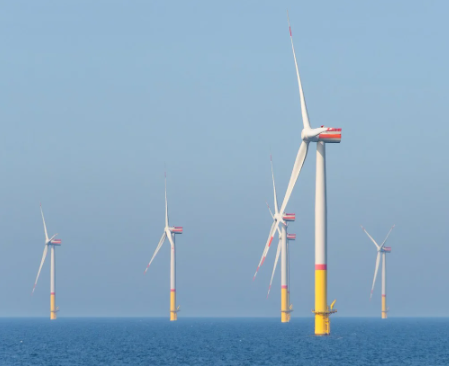
The core of wind power generation is the energy conversion process that transforms wind energy into electrical energy. Solar radiation causes uneven heating of the Earth's surface, leading to differences in atmospheric pressure distribution. The horizontal movement of air forms wind, which contains kinetic energy. When wind blows against the wind turbine blades, the special airfoil design of the blades creates a pressure difference between the upper and lower surfaces, generating lift to drive the rotation of the blades and hub, thus completing the conversion of wind energy into mechanical energy. For wind turbines equipped with a gearbox, the low-speed rotation transmitted by the main shaft is accelerated through the gearbox to match the rated speed of the generator; direct-drive wind turbines eliminate the gearbox, with the main shaft directly connected to the generator rotor. The generator cuts magnetic field lines through a rotating magnetic field, ultimately converting mechanical energy into alternating current to achieve electrical energy output. Wind energy capture efficiency is significantly affected by wind speed (proportional to the cube of wind speed) and has a theoretical limit (Betz limit of approximately 59.3%).
B.Core Modules
- Rotor System: Includes blades and hub. Blades are made of glass fiber-reinforced plastic or carbon fiber composite materials, and their aerodynamic shape directly determines wind energy capture efficiency. The hub is responsible for connecting the blades and transmitting torque.
- Transmission/Direct Drive System: The traditional transmission system includes a main shaft and gearbox to achieve speed adaptation; the direct-drive system has no gearbox, reducing mechanical losses and maintenance requirements.
- Generator: The mainstream types are doubly-fed induction generators and permanent magnet synchronous generators. The former achieves stable output at a wide range of wind speeds through frequency converters, while the latter has high efficiency and is suitable for direct-drive systems.
- Control System: Includes main control, pitch control, and yaw control systems. The main control coordinates the overall operation of the unit, the pitch control system adjusts the blade angle to control wind energy absorption, and the yaw control system keeps the nacelle facing the wind direction.
- Tower and Foundation: Towers are mostly made of steel structure or concrete, elevating the nacelle to a height with optimal wind speed; the foundation is designed according to geological conditions to provide stable support against operational loads.
II. Solar Power Generation
A:Working Principle
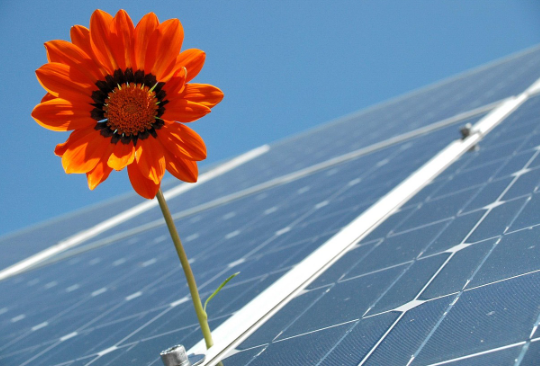
Solar power generation relies on the photovoltaic effect of semiconductor materials to realize the direct conversion of sunlight into electrical energy. When sunlight irradiates solar panels, photons interact with electrons in the semiconductor to generate electron-hole pairs. Under the action of the internal electric field of the solar panel, electrons and holes separate and move to both ends, forming outputtable direct current. The system operates in off-grid and grid-connected modes: the off-grid system stores excess electrical energy through energy storage devices to meet electricity demand during periods without sunlight; the grid-connected system is connected to the public power grid, transmitting surplus power to the grid when generating more than needed and drawing power from the grid when insufficient.
B:Core Modules
- Solar Panels: Core power generation components composed of multiple photovoltaic cells connected in series/parallel, with materials mostly being monocrystalline silicon, polycrystalline silicon, or thin-film semiconductors.
- Controller: Regulates and controls the charging and discharging of the circuit, prevents overcharging and over-discharging of energy storage devices, and protects the safe operation of system components.
- Inverter: Converts the direct current generated by solar panels into alternating current suitable for household appliances, industrial equipment, and the power grid.
- Energy Storage Device: Mainly based on storage batteries, it stores excess electrical energy to ensure the continuity of power supply for off-grid systems, and can be configured on-demand for grid-connected systems.
III. Distribution of Domestic Wind Power Industry Belts
- Wind Energy-Rich Belt in the "Three Norths" Region: Covers Northeast China (Liaoning, Jilin, Heilongjiang), Hebei, Inner Mongolia, Gansu, Qinghai, Tibet, Xinjiang and other provinces. The wind power density is mostly above 200-300 W/m², and some areas reach 500 W/m². The exploitable reserves account for about 79% of the country. With flat terrain and convenient transportation, it is suitable for large-scale wind farm construction. Attention should be paid to the impact of low temperatures and sandstorms, as well as grid overall planning.
- Wind Energy-Rich Belt in the Southeast Coastal Region: Includes Shandong, Jiangsu, Zhejiang, Fujian, Guangdong, Guangxi, Hainan and other provinces. Influenced by the marine climate and strait terrain, the wind energy resources are stable, making it a core area for the coordinated development of offshore wind power and onshore wind power.
- Inland Characteristic Wind Energy Regions: Some inland lakes and special terrain areas (such as parts of mountainous areas in Hubei and Hunan) have potential for wind resource development, suitable for the layout of distributed wind power projects
- .
Comparison and Differences Between NCM Lithium Batteries and LFP Lithium Batteries