Photovoltaic Power Stations Solar Power Systems Brief
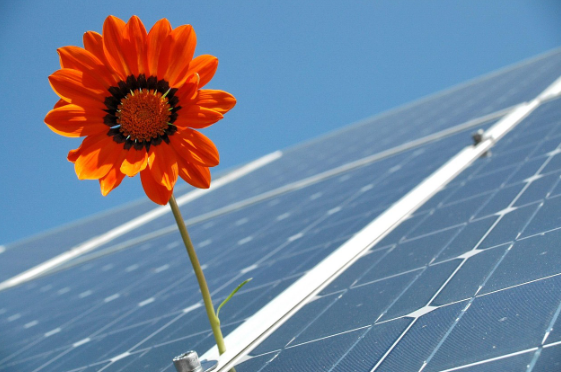
The core working principle of a photovoltaic power station is the "photovoltaic effect". When sunlight irradiates the photovoltaic panels made of semiconductor materials (usually silicon), photons hit the electrons in the panels, enabling the electrons to gain energy and break away from the bondage of atoms, forming free electrons. These free electrons move directionally in the internal circuit of the panels, generating an electric current. Subsequently, the inverter converts the direct current generated by the photovoltaic panels into alternating current that can meet the needs of daily life and industrial production. After that, the alternating current is stepped up by a transformer and connected to the power grid, ultimately realizing the transmission and use of electric energy.


A complete photovoltaic power station is mainly composed of photovoltaic cell modules, inverters, support systems, collector lines, step-up substations, and monitoring systems. Photovoltaic cell modules are the core of power generation, and their quality and efficiency directly affect the overall power generation of the power station. As a key equipment for energy conversion, inverters determine the efficiency and stability of electrical energy conversion. The support system is used to fix the photovoltaic cell modules so that they can receive sunlight at the optimal angle. Common ones include fixed supports and tracking supports. Tracking supports can adjust the angle of the modules in real time according to the change of the sun's position, further improving the power generation efficiency. The collector lines are responsible for collecting the electrical energy generated by each photovoltaic string. The step-up substation steps up the collected electrical energy to meet the voltage requirements of the power grid connection. The monitoring system can monitor the operating status of various equipment in the power station, power generation, and other information in real time, facilitating the operation and maintenance management by the staff.

With the increasing depletion of traditional fossil energy (such as coal, oil, and natural gas) and the increasingly serious environmental pollution and greenhouse effect caused by their combustion, finding clean and renewable alternative energy has become an urgent task. The solar energy used by photovoltaic power stations is an inexhaustible renewable energy source, and no pollutants or greenhouse gases are produced during the power generation process, which is friendly to the environment. The large-scale construction of photovoltaic power stations, on the one hand, can reduce the dependence on traditional fossil energy, reduce the pressure of energy import, and ensure national energy security. On the other hand, it can effectively reduce carbon emissions, help achieve the goals of "carbon peaking" and "carbon neutrality", and promote global climate governance. In addition, photovoltaic power stations can also drive the development of related industrial chains, such as photovoltaic cell manufacturing, inverter production, and support processing, create a large number of jobs, and promote economic growth.

The application scenarios of photovoltaic power stations are very wide. They can be built on the ground to form large-scale ground photovoltaic power stations, or combined with buildings to create distributed photovoltaic systems. Large-scale ground photovoltaic power stations are usually located in unused lands such as wasteland, deserts, and gobi. They cover a large area and have considerable power generation, which can provide a large amount of electrical energy for the regional power grid. For example, the large-scale photovoltaic power stations built in the desert areas of northwest China not only make full use of the local abundant solar energy resources but also realize desert control while generating power through the "photovoltaic + desert control" model, improving the local ecological environment. Distributed photovoltaic systems are mainly installed on the roofs and walls of buildings, such as the roofs of residential houses and industrial and commercial factories. This model has the advantages of being close to the user side, small transmission loss, and flexible installation. It can meet the user's own electricity demand, and the excess electrical energy can also be connected to the power grid to realize "self-generation and self-use, and surplus electricity connected to the grid". In addition, photovoltaic power stations can also be applied in the transportation field, such as installing photovoltaic modules on the canopies of highway service areas and parking lots to provide electrical energy for electric vehicle charging. They can also be used for power supply in remote areas to provide stable power support for villages and outposts that are not connected to the power grid.
With the continuous advancement of technology and the continuous decline of costs, the future development prospect of photovoltaic power stations is very broad. In terms of technology, the conversion efficiency of photovoltaic cells will continue to improve. The research, development, and application of new high-efficiency photovoltaic cells (such as perovskite photovoltaic cells) will become a key direction, which is expected to further improve the power generation efficiency. The performance of inverters will also be continuously optimized, developing towards higher efficiency, more reliability, and more intelligence. At the same time, the combination of energy storage technology and photovoltaic power generation will be closer. The energy storage system can effectively solve the intermittent and fluctuating problems of photovoltaic power generation, realize the stable output and efficient use of electrical energy, and ensure the safe and stable operation of the power grid. In terms of the market, the global demand for clean energy will continue to grow. As an important representative of clean energy, photovoltaic power generation will have a growing market scale. It will not only be widely used in developed countries but also usher in opportunities for rapid development in developing countries. In addition, the complementary integration of photovoltaic power generation with other new energy sources (such as wind energy and hydropower) will become a trend. By building an integrated energy system, the coordinated supply of multiple energy sources can be realized, further improving the stability and reliability of energy supply.

The development Trends of Ebike lithium-electric bicycle electric bicycles
Zhou Jie: Development status and market prospects of virtual power plants in Japan